Scan with iPhone to joinTestFlight beta
Page: 14
🚨 BREAKING: The FBI has successfully extracted deleted Signal messages from a suspect's iPhone via notification storage, the place where all your notifications are stored for up to one month. Notification storage stores data from all messaging apps, it's a big flaw in iOS. But there's a way to turn it off...
UPDATE: We've proactively taken down the web app (http://app.zerion.io) and @blockaid_ has blocked the site as a precautionary measure The iOS and Android Apps, Web Extension are SAFE and are not affected We're actively monitoring the situation and we'll share another update once the web app is restored
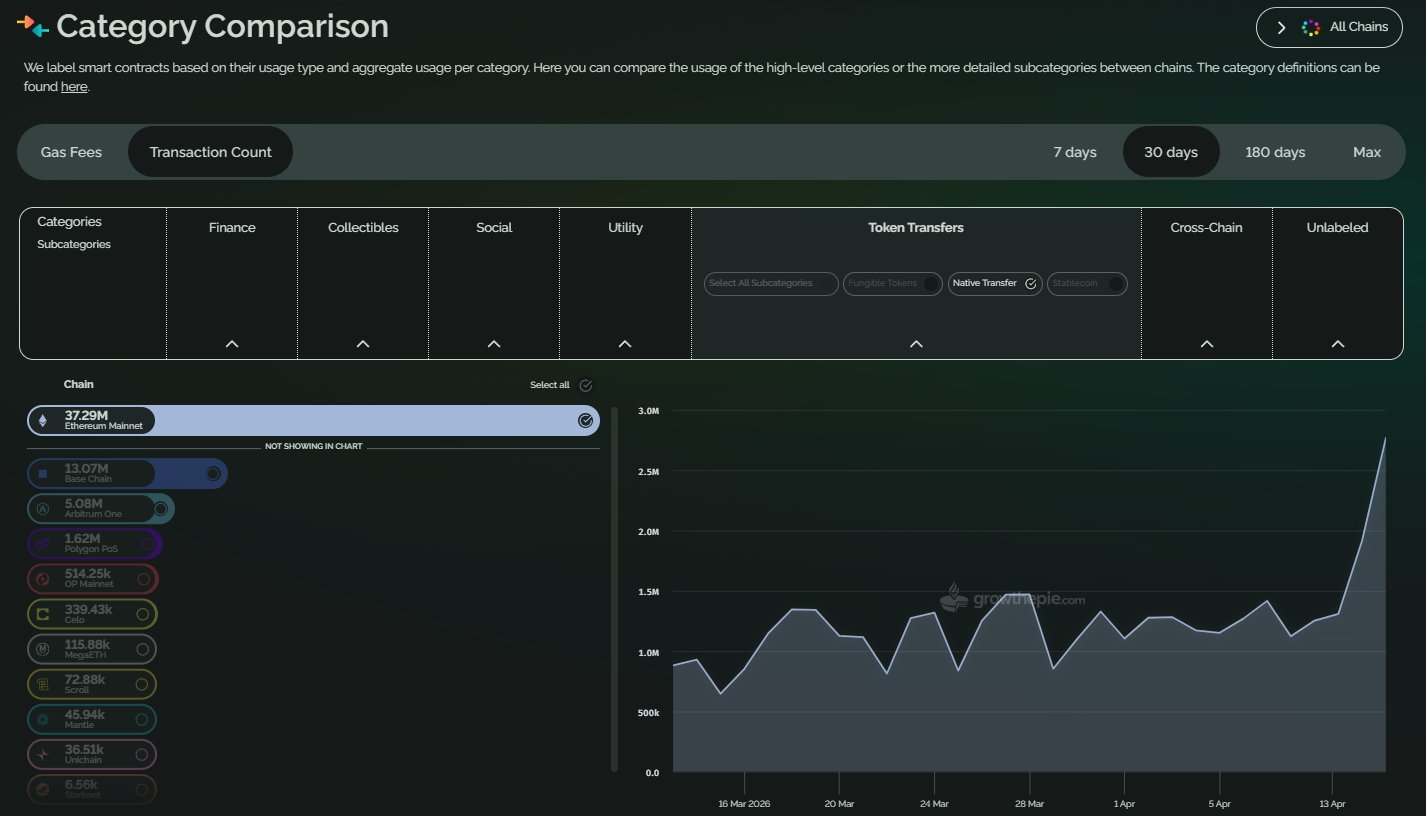
Looks like we are seeing another mass address poisoning attack on Ethereum Mainnet. Yesterday, there were 2.8 million native ETH transfers, a 100% increase from the baseline. Be sure to double-check which wallet you are sending to. Hackers are creating very similar-looking addresses and sending tiny amounts of ETH to trick people.
ERC-7715 is live on Gnosis Chain with @MetaMaskDev. Agents can now request scoped permissions to transact on your behalf. Specific actions, specific limits, enforced on-chain. On a payments chain, that matters. Think automated DCA, streaming payments, AI agents that can spend but only within guardrails you set. Bank on Gnosis.
Shitpost as a smart contract ✨ Infinite auction ✨ A continuous, 24-hour auction that never ends, where the highest bidder at the end becomes the new owner. The winning bid is paid forward; every round rewards the previous winner. https://auction.rudxane.xyz/
🚨 SECURITY ALERT 🚨 We are aware of a potential domain hijack affecting the @eth_limo DNS. Please DO NOT use the following domains until further notice. ❌ staking.safenet-beta.eth dot limo ❌ explorer.safenet-beta.eth dot limo You can safely access these services via IPFS directly: 🔹 Staking: https://ipfs.io/ipfs/bafybeiemy5vn7xwsfr… 🔹 Explorer: https://ipfs.io/ipfs/bafybeigq44oghn3enl… This is NOT a Safe specific issue and any other dot limo domains should also be avoided till the @eth_limo team resolves the issue. Stay vigilant.
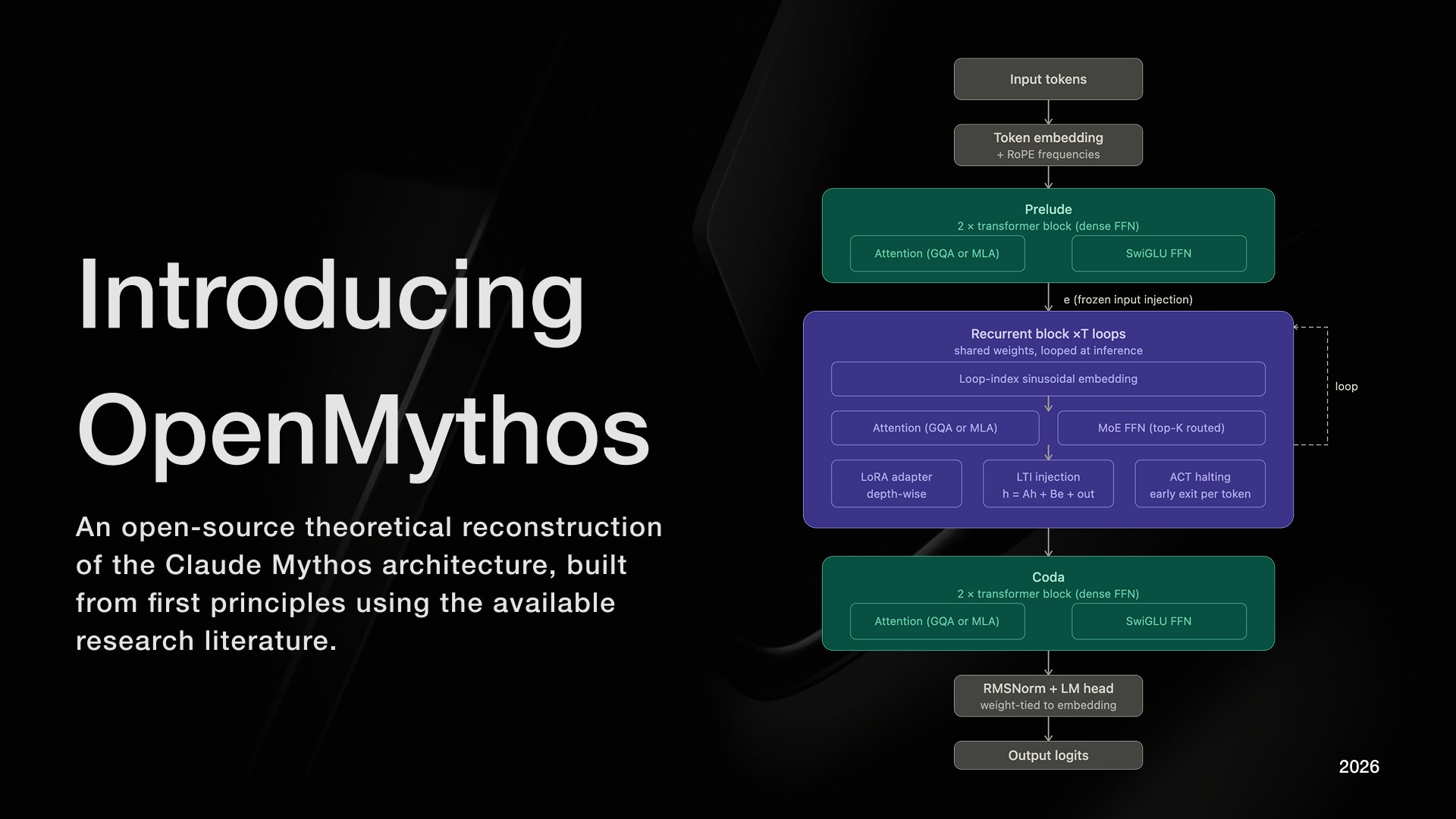
Introducing OpenMythos An open-source, first-principles theoretical reconstruction of Claude Mythos, implemented in PyTorch. The architecture instantiates a looped transformer with a Mixture-of-Experts (MoE) routing mechanism, enabling iterative depth via weight sharing and conditional computation across experts. My implementation explores the hypothesis that recursive application of a fixed parameterized block, coupled with sparse expert activation, can yield improved efficiency–performance tradeoffs and emergent multi-step reasoning. Learn more ⬇️🧵
Aave Sees $5.4B ETH Outflows as rsETH Exploit Raises Concerns According to Lookonchain, the Kelp DAO exploit has left Aave saddled with bad debt after the attacker deposited rsETH to drain ETH. This has sparked a massive whale exodus, with over $5.4 billion fleeing the protocol in a panic. Justin Sun alone yanked 65,584 ETH (~$154M) from the platform. Driven by this mass flight, Aave's ETH utilization rate has now maxed out at 100%.
Due to rsETH LayerZero infrastructure being hacked, we decided to pause Curve LayerZero infrastructure before more understanding about the root causes is obtained, out of precaution. This affects: * CRV bridging from chains: bnb, sonic, avalanche, fantom, etherlink, kava. Other chains use native bridging; * crvUSD fast bridge (slow bridging for L2s still works).
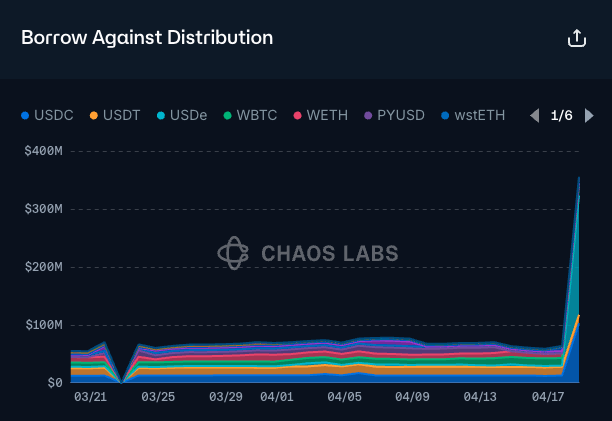
we're now seeing some negative secondary effects of illiquidity in Aave stablecoin markets (in this example, Aave Core USDT on Ethereum) because users cant withdraw due to 100% utilization, there has been a ~$300 million increase in borrowing with USDT collateral in just the past day since the rsETH exploit with a 75% max LTV, users with stuck USDT deposits can take out up to 3/4 of the value of their aave position. but this ends up reducing liquidity in other markets, with USDC and USDe markets now at 100% utilization as well i think aave should consider immediately prevent new borrowing with illiquid collateral assets (eg setting LTV=0 for USDT, USDC, USDe on Aave Core, and relevant assets on other markets/chains, or alternatively disabling borrows across the board on all assets)
because the final allocation of losses between rsETH on Ethereum (which is technically "fully backed") and external chains is still tbd, i can only read this as a statement of Aave Labs' preference - they would rather rsETH on mainnet to have zero haircut, and for rsETH on L2s/external chains to bear the full loss (essentially zeroed out) ultimately, the allocation of losses will be mostly decided by Kelpdao team (and lawyers) but we can consider why this outcome would be aave labs' preference, and what would be the impact on users if this is how it ends up working out # aave labs preference aave core market on ethereum is covered by umbrella insurance module, and is also explicitly covered by aave dao backstop (eg dao committed to using treasury to backstop against bad debt). so if rsETH on ethereum ends up with no haircut, then not only are umbrella users completely unaffected (other than potentially GHO stakers to cover unbacked GHO on external chains), but the aave treasury remains intact aave core is also the primary money-maker for the aave protocol, and preserving this is probably top priority for labs team # user impacts if rsETH on Ethereum has no socialized losses/haircut, users on Aave core would end up being mostly unimpacted however, certain L2 networks would face an extremely heavy burden, with WETH suppliers taking a direct hit from unbacked rsETH current rsETH collateral across external chains includes: - Base: $71 million - Arbitrum: $152 million - Mantle: $116 million - Ink: $21 million - Linea: $1.4 million in some cases, rsETH backed loop positions may comprise a large share of the backing of aWETH, meaning that any assets borrowed against ETH may also be at risk of a haircut (USDC and USDT0 markets) mantle, arbitrum, and base seem to have the highest risk here, with mantle in particular having the majority of aWETH backed by potentially zero value rsETH. it is possible that Aave could successfully maneuver these chains into bailing out their markets (this may be part of the reason why Aave Labs prefers no loss socialization on Ethereum, to force the issue with relatively better capitalized chain ecosystems) we also note that ethena has a material deposit amount in the mantle USDT pool (https://debank.com/profile/0xB8734a14fBD… which may face a haircut, potentially exceeding their excess capital buffer. if this is the case, then this would become another vector of contagion risk into Aave markets including Core and Plasma (which has been relatively less affected as it had no rsETH exposure at the time of the hack) # comparison with full socialization personally, i think that concentrating losses on external chains is actually a worse outcome for Aave in the case where losses are spread evenly including Ethereum users, this would engage Umbrella ETH depositors (roughly $50 million) and also enable using rsETH collateral on Aave Core to repay part of the debt, likely reducing the uncovered loss on Ethereum mainnet to an amount lower than Aave's current treasury reserves the loss levels on external chains would then be at much more manageable levels, with less risk of cascading spillover into large haircuts on stablecoin markets or impairment to other key aave collateral assets like USDe awaiting further updates from the Kelpdao team to see how this will play out in practice
Here's my update to the broader community about the ongoing incident investigation. I want to give you the rundown of the situation directly. A Vercel employee got compromised via the breach of an AI platform customer called http://Context.ai that he was using. The details are being fully investigated. Through a series of maneuvers that escalated from our colleague’s compromised Vercel Google Workspace account, the attacker got further access to Vercel environments. Vercel stores all customer environment variables fully encrypted at rest. We have numerous defense-in-depth mechanisms to protect core systems and customer data. We do have a capability however to designate environment variables as “non-sensitive”. Unfortunately, the attacker got further access through their enumeration. We believe the attacking group to be highly sophisticated and, I strongly suspect, significantly accelerated by AI. They moved with surprising velocity and in-depth understanding of Vercel. At the moment, we believe the number of customers with security impact to be quite limited. We’ve reached out with utmost priority to the ones we have concerns about. All of our focus right now is on investigation, communication to customers, enhancement of security measures, and sanitization of our environments. We’ve deployed extensive protection measures and monitoring. We’ve analyzed our supply chain, ensuring Next.js, Turbopack, and our many open source projects remain safe for our community. The recommendation for all Vercel customers is to follow the Security Bulletin closely (https://vercel.com/kb/bulletin/vercel-ap… My advice to everyone is to follow the best practices of security response: secret rotation, monitoring access to your Vercel environments and linked services, and ensuring the proper use of the sensitive env variables feature. In response to this, and to aid in the improvement of all of our customers’ security postures, we’ve already rolled out new capabilities in the dashboard, including an overview page of environment variables, and a better user interface for sensitive env var creation and management. As always, I’m totally open to your feedback. We’re working with elite cybersecurity firms, industry peers, and law enforcement. We’ve reached out to Context to assist in understanding the full scale of the incident, in an effort to protect other organizations and the broader internet. I also want to thank the Google Mandiant team for their active engagement and assistance. It’s my mission to turn this attack into the most formidable security response imaginable. It’s always been a top priority for me. Vercel employs some of the most dedicated security researchers and security-minded engineers in the world. I commit to keeping you updated and rolling out extensive improvements and defenses so you, our customers and community, can have the peace of mind that Vercel always has your back.
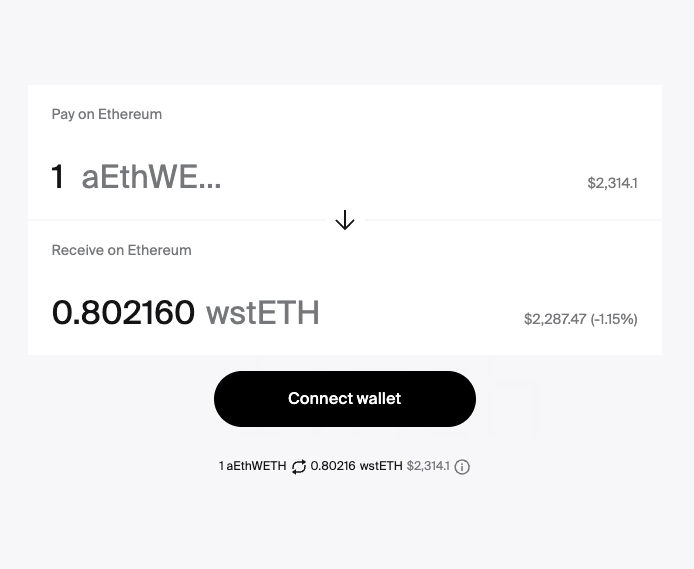
Calling all ETH lenders locked on Aave. We have built a way to exit to any token. While Fluid provides redemption to wstETH/weETH, via our Pathfinder algorithm, you can swap aEthWETH directly into the asset of your choice. aWETH → any token on https://1inch.com/swap?src=1:aEthWETH&am… in one click if you're still stuck.
1/ On April 18, an attacker drained 116,500 rsETH (~$292M) from Kelp's cross-chain bridge. rsETH markets on Aave and other lending venues were frozen shortly thereafter.
Update on rsETH incident: WETH reserves on the Ethereum Core V3 market have been unfrozen and users can supply WETH to Ethereum Core V3 again. WETH LTV remains at 0. WETH reserves on Ethereum Prime, Arbitrum, Base, Mantle, and Linea remain frozen. Aave service providers will continue to work on next steps and provide updates accordingly.
Wanna move out of your staked Eth positions from aave? Just use Bungee.
The KelpDAO hacker has swapped nearly all of its 75,700 ETH holdings, worth about $175 million, into BTC over roughly a day and a half. The cross-chain swaps were primarily routed through THORChain. Due to the sheer size of the transactions, the laundering activity also generated about $800 million in volume and roughly $910,000 in platform fee revenue for THORChain. Source: https://x.com/EmberCN/status/20471168529…
After serving the Cardano ecosystem since 2021 and sharing an incredible journey with thousands along the way, we’ve reached a point where the JPG Store & Comet platforms have to be sunset. While we deeply value the people who have supported us, the platforms have reached a stage where they are no longer sustainable to operate. JPG Store & Comet will continue to be online until the 23rd of May. After which, the website will be shut down, though the smart contracts will continue to live on. 🧵1/6
Aave is my life's work and we're working nonstop to find the best possible outcome for users. I’m personally contributing 5000 ETH to DeFi United as we continue working together with partners on formalizing more commitments. I’m working to see this resolved and market conditions normalized as soon as possible. DeFi United.
Aave service providers have published an Aave DAO governance proposal to contribute 25,000 ETH to the ongoing DeFi United effort. Aave DAO's ETH contribution would go towards the plan to restore rsETH's backing to try and normalize market conditions as quickly as possible. DeFi United. https://governance.aave.com/t/arfc-rseth…
Litecoin incident post-mortem is out. > 0day bug that wasn’t properly patched across all mining pools > caused a block re org > doesn’t seem like user funds affected > all mining pools are properly updated now > chain is back to normal > hardly anyone really seemed to notice (or care) > another exploit Insane how many exploits are happening within such a short time span.
Aave service providers and ecosystem partners have established a recovery fund that factors in pending DAO votes, including the Arbitrum governance vote, indicative agreements, and successful execution to restore rsETH’s full backing. We are DeFi United, and resolving this for affected users and the broader DeFi ecosystem is our top priority. We have aligned with @KelpDAO and @LayerZero_Core on the technical steps required to execute our plan. That work is now moving forward. Thank you to everyone who contributed to DeFi United and to the thousands of community members who stood with us throughout. Watching the DeFi community come together has been genuinely inspiring. The final recovery plan, steps for users, and further updates will follow shortly.
My understanding is that some of the contributions to "DeFi United" are actually donations (e.g. Stani) but others are loans. I don't know why this is not clearly separated but IMO calling things "donations" that are not, does big reputational damage to actual donations.
Last month I developed FusionSparse a Python layer for the Fusion API that uses 50% less tokens for coding agents, ie 2x larger CAD programs fit in their working memory enabling more complex parametric CAD programs I’m making it publicly available today https://github.com/sterlingcrispin/Fusio…
This is why local tools and local AI matters so much No matter how cool the main models are so long as they can revoke your access to them and monitor everything you do with them, they are a huge liability. The more you rely on them the worse the liability. We need local AI
Statement about the future of fxhash Hey fx community, As you are aware, these times have been hard for platforms on NFT markets, and we're no exception. We recently had to scale down the team and have been working on scaling down our infrastructure. At this point in time, no one in the team is getting paid, there's myself and a handful of volunteers, as we're essentially running out of cash. I can understand why many platforms stopped trying, building this kind of product is draining you to the bone. That being said, I am committed to getting us through this rough patch as I still deeply believe in such a tool existing for artists, but it's clear that the current model is not working. I've been thinking a lot about the future of fxhash, if any, and it came clear to me that the platform drifted from its initial goal of serving artists primarily along its journey. I think at the root of the problem is that a tool serving artists should be fully owned by its users, and not operated by a small team of people, regardless of how benevolent might their intentions be. While it's always been a long-term goal of ours to fully decentralize the protocol at some point, now seem to be the only opportunity we'll have at it. It only seems like a tangible path towards the future in case the company could not keep supporting the product. We're close to securing some money as a loan / investment, targeting end of June. Once we get this cash, it's clear that we will need to immediately change our trajectory. The plan - reduce operational costs to a minimum - 4k$/mo in services -> will require 1-3 months of work - 8k$/mo in employment -> reemploy a very small and focused team - 2 devs - 2-3 part-time members for helping across the board (admin, marketing, artist liaison, community, etc...) - transition towards decentralization - implement a DAO - open-source everything - figure out pipelines to slowly decentralize decision-making and ownership, from governance towards implementation - open books: company financials for everyone to see - first order of business to solve together: financial sustainability, targeting profitability - consolidate the core product through governance - chains supported - features available - etc... This is the very last time we'll be able to raise cash in our current state, so essentially this will be our last shot at finding a way to build a sustainable long-lasting ecosystem. But I deeply think that the only way to do so will be collectively. It's essential that we reduce operational costs to a minimum until we figure out a sustainable path in the future. The bridge till June It's unclear whether we will be able to keep all the services running until we get cash. We took all the steps that we can and informed our providers, but their policies are understandably strict, I'll keep you updated about this.
Aave LLC has filed an emergency motion to vacate a restraining notice served on Arbitrum DAO on May 1, 2026 that attempts to seize approximately $71 million in ETH belonging to victims of the April 18 exploit. A thief does not gain lawful ownership of stolen property simply by taking it, and the law is clear on this. Those assets were recovered to be returned to users victimized in the April 18, 2026 exploit. Freezing them harms the very people this recovery effort is designed to protect. We’ve asked the court for an expedited hearing and a temporary vacatur, and we are continuing to work alongside the Arbitrum community and DeFi United to make affected users whole.
In line with the technical plan outlined below, the attacker's rsETH positions on Aave have been liquidated on Ethereum and Arbitrum. The liquidated collateral now sits with the Recovery Guardian as specified in the AIP. No other users were affected, and Umbrella was also untouched. This was a critical step in the recovery roadmap, with next steps to follow.
Ok, I’ll take the bait: Venice just opened. How much of that work is running on ETH + NFT rails? Right around zilch. The Whitney Biennial? Also zilch. Alex Feim does a great substack listing all the gallery shows in NYC. How much of the work in those shows is on those rails? Right around zilch. We could keep going with current museum shows, the big auction houses, fairs etc. Maybe it gets a little above zilch, but not by much. Eli writes in the future tense (“will run”) so we can’t say it’s impossible, and I get that CT is the hopium echo chamber but come on….
At @EthPrague, a highly detailed and in-depth conversation took place with @jbaylina and @VitalikButerin, in which @etheconomiczone was discussed. You can read the summary here.
Ethereum is for shipping. Here are 22 things the Ethereum ecosystem launched, upgraded, and announced over the past month. 0/ Ethereum hit a new all-time high of 72.8 Million monthly transactions, the highest in network history. 1/ @ethereumfndn, @chainlink, and @Nethermind launched a $1M audit subsidy program to help Ethereum builders access high-quality security reviews. 2/ South Korea’s largest crypto exchange, Upbit, announced plans for GIWA Chain, an Ethereum L2 built on @Optimism. 3/ @AragonProject introduced Permissions Audits to help protocols secure roles, multisigs, and admin systems. 4/ @fileverse shipped Comments v2, improving the collaboration experience, with privacy by default. 5/ The Ethereum Applications Guild (@EthAppsGuild) launched to support Ethereum-native apps and real-world adoption. 6/ Privacy went live on @Optimism with confidential computing support on OP Mainnet. 7/ @StarkWareLtd brought native proof verification to Starknet mainnet with Shinobi, enabling private trading flows and OTC settlement. 8/ @worldcoin launched World ID 4.0, expanding proof of human credentials across apps, enterprises, and AI agents. 9/ Applications on Ethereum hit ~$310B in user deposits. 10/ @l2beat released a new interactive interoperability map showing how value moves across Ethereum’s expanding ecosystem. 11/ @AlchemixFi launched V3, the latest version of its self-repaying, non-liquidating loan product, with higher capital efficiency and improved peg mechanics. 12/ @OfficialMoonDAO raised $172k + from 157 contributors to send the man who coined the “overview effect” to space. 13/ @ethereumfndn announced the Road to @EFDevcon 8 Academic Program, supporting regional research and academic events ahead of Devcon. 14/ Ethereum core contributors gathered in Svalbard for Soldøgn Interop, a week-long event focused on hardening Glamsterdam implementations to help scale Ethereum securely. 15/ @basepaint_xyz hit 1,000 straight days of onchain art creation, with 121M+ pixels painted and $1.5M + distributed to 4,000+ artists. 16/ New Ethereum community hubs launched in Hong Kong and Floripa, growing local coordination and ecosystem activity across Asia and Latin America. 17/ The EF’s ETH Rangers public goods security program wrapped after helping recover or freeze $5.8M, reporting 785+ vulnerabilities, and identifying ~100 North Korean IT workers targeting Web3 teams. 18/ @centrifuge launched a tokenized S&P 500 fund on @base, bringing 24/7 onchain index exposure to non-U.S. users. 19/ @0xcatalysis launched Covered Vaults on Ethereum, DeFi vaults with built-in onchain risk coverage backed by delegated capital. 20/ @Uniswap processed $3T in all-time volume on Ethereum mainnet. 21/ @RAILGUN_Project hit $5 billion of total all time private volume.
The first tranche of rsETH has been transferred into the LayerZero OFT adapter, and rsETH bridging between mainnet and L2s is back open.
railgun installed 😎🚀
We’re restructuring Dune to sharpen our focus around the core data products thousands of customers across the crypto industry rely on. That unfortunately means we’ve let 25% of the team go this week. These are exceptional people I can wholeheartedly recommend — ping me if you’re hiring top crypto talent. Going forward, Dune is all-in on two shifts: AI and institutions coming onchain. All the way back in 2018 Dune pioneered crypto data accessibility, and we’re excited to accelerate that faster than ever with AI. We’re the only player who has done the hard work of building the end-to-end stack for crypto data: ingestion, QA, storage, cleaning, normalizing and querying. With Dune MCP, teams and agents can now build dashboards and workflows without needing to know anything about SQL nor data infrastructure (and associated bills). Dune already serves virtually every leading crypto company, and now also the world’s most forward-leaning financial institutions. As currencies, stocks, bonds, commodities and more move onchain, we’re investing heavily in our data layer and white-glove service to power institutions. For 8 years we've grown through multiple rollercoaster cycles while other data providers have come and gone. We remain well capitalized, excited about the future, and committed to our mission of making crypto data accessible. The Data Must Flow.
rsETH protocol operations have fully resumed. - The exchange rate was updated at 16:45 CET today, reflecting all staking rewards accrued during the pause. - EIGEN claims are now distributable to rsETH holders for the full pause window. - Deposits and withdrawals are live on mainnet and L2’s - rsETH backing is fully restored. Details below. 🧵
Visibility, attention, and support are not decentralized. I think this idea that NFTs somehow escaped gatekeeping is one of the biggest myths the space keeps telling itself. It sounds good because blockchain infrastructure is technically open; anyone can mint, anyone can buy, and everything is transparent on-chain. Fine. But visibility is not decentralized. Attention is not decentralized. Support is not decentralized. And those are the things that mostly determine (especially online) who gets to exist culturally. The reality is that NFTs reproduced a lot of the same social structures as the traditional art world almost immediately. A small group of artists became canonized early, collectors clustered around them, platforms amplified them, and then everyone else was told the ecosystem was “open” while competing for scraps of attention in an economy driven almost entirely by visibility algorithms and insider networks. The success rate for artists experimenting natively in NFTs is not radically different from the traditional art world (something I personally have experimented with first in my trad art career because I am Mexican and not in the USA or Europe, and secondly in NFTs because I was late and not doing generative art). We act like this was some mass liberation event for artists, but how many actually built sustainable careers? How many received long-term support? How many got to keep experimenting after the speculative wave cooled off? Very few. The artists who succeeded were largely the ones who were selected early, platformed early, supported by collectors early, or given enough visibility to build communities around themselves. That’s not an insult, it’s just reality. It mirrors traditional art structures much more than people want to admit. In both systems, a very small number of artists are given enough oxygen to continue evolving publicly while most others remain invisible despite producing meaningful work. And I think this obsession with “nativeness” sometimes ignores how much of NFT culture was financially accelerated by speculation rather than by some fundamentally new social model. The transparency argument is interesting technologically, yes, but transparency of transactions doesn’t eliminate power structures. You can see the hierarchy more clearly, but the hierarchy still exists. Maybe even more aggressively because everything becomes publicly quantified. You can literally watch social consensus form in real time around a chosen set of artists and collections. You can watch people chase wallets, mimic buying behavior, perform affiliation, and build prestige loops. That’s not the disappearance of the art world. That’s just a faster and more financialized version of it (which is fine!). And this idea that traditional art is slow and NFTs are somehow more democratic because they circulate faster, I don’t fully buy that either. Fast circulation often benefited speculation more than artistic depth. A lot of artists became trapped producing for velocity, relevance cycles, timelines, floor prices, and engagement. The market rewarded constant visibility, not necessarily sustained artistic thinking. This I would also argue, is one of the biggest problems of our space. One could argue that great gestures take time, not just efficient network distribution. I also think people romanticize “community” in NFTs without acknowledging that communities are often formed around asset performance first and art second. Not always, but often. If prices collapsed, communities frequently disappeared too. That might tell us something important about the underlying structure of our space. What drew myself and many traditional art people into crypto initially wasn’t simply that it was “new.” The art world is constantly exposed to novelty. What was compelling was the temporary feeling that alternative forms of circulation and patronage might emerge. This felt like I was going to skip the gatekeeping I had experienced for being born in the South. But over time, what actually I saw emerged was another status economy with its own elites, its own language, its own institutions, and its own mechanisms of exclusion. Partly why I decided to create the projects I create was because I saw the massive opportunity that existed but that artists would need help to be seen, supported, and collected. NFTs are the most exciting space for contemporary art right now IMO. I fully believe blockchain has meaningful implications for provenance, digital ownership, artist royalties, and online-native cultural forms. But I think we have to stop pretending the ecosystem escaped human behavior or escaped the concentration of power. It didn’t. The same dynamics exist everywhere: a few artists become legible to the market, a few collectors shape discourse, a few platforms dominate visibility, and most artists remain structurally peripheral no matter how “open” the infrastructure is. That’s not failure. That’s just culture. The mistake is pretending that code dissolved it 🤔🫣🥺
In line with the recovery plan, the last tranche of rsETH was sent to the LayerZero lockbox. rsETH and all Aave markets are operating normally.
More people should know about the Interfold. It's basically what I've been yelling at people to build with the MACI ideas ( https://ethresear.ch/t/minimal-anti-coll… ) for almost a decade, and now it exists, in a generalized form. The idea is: a privacy protocol optimized for things like voting (and other use cases eg. secret-ballot auctions). The mechanism generates a threshold encryption key, and people send in their votes onchain, using a ZKP to prove eligibility. An arbitrary computation on the votes gets run inside FHE, and then threshold-decrypted. From what I can tell (the docs are good https://docs.theinterfold.com/CRISP/intr… ), it gets pretty optimal security guarantees: * Voter anonymity can be made unconditional if eligibility is proven with ZK-SNARKs * Censorship resistance is guaranteed by ethereum (votes can be posted directly onchain, and there's a proof that all posted votes are taking into account) * The correctness of the outputted result can be ensured via ZK over FHE * Liveness and coercion resistance depend on M-of-N honesty; unavoidable given present-day technology The main limitation is that today "ZK over FHE" is only properly available for additive vote tallying, as it's too expensive for computations that involve multiplication or other more complicated manipulation at the moment. There's work in progress on slashing-based / optimistic computation for such situations. (And of course ideally in the long term we'd figure out obfuscation so you can get rid of the M-of-N committees😃)